
That Frustrating Moment When Your Garage Door Won't Stay Closed
You press the button on your remote, watch the garage door descend, and just before it reaches the floor — it stops, reverses, and goes right back up. You try again. Same result. Maybe it works on the third attempt, maybe it doesn't. Either way, you're standing in your driveway in the Buffalo cold wondering what's going on.
This is one of the most common garage door complaints we hear from homeowners across Buffalo, Cheektowaga, and West Seneca. The good news is that a reversing garage door usually isn't a sign of a catastrophic failure. The bad news is that ignoring it can lead to bigger problems — or leave your garage wide open when you're not home.
Let's walk through the most common reasons your garage door reverses before hitting the floor and what you can do about each one.
1. Misaligned or Dirty Safety Sensors
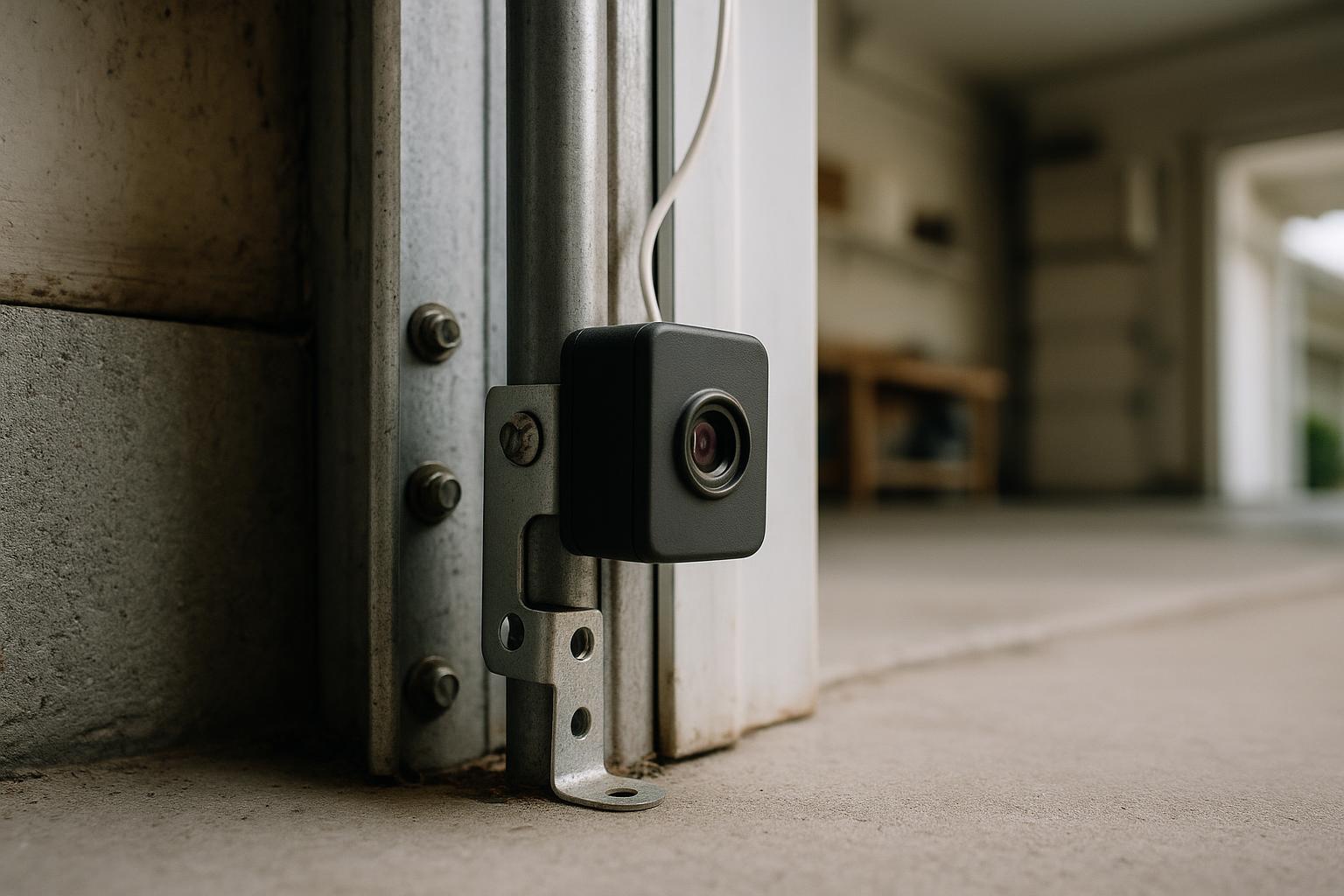
This is the number one cause of a garage door that reverses unexpectedly. Every modern garage door opener has two photo-eye sensors mounted near the bottom of the door tracks, one on each side. These sensors send an invisible beam across the opening. If anything breaks that beam while the door is closing, the opener reverses the door to prevent it from crushing a person, pet, or object.
Here's what can go wrong with these sensors:
- Dirt or debris on the lens: Buffalo's winters bring salt, slush, and grime that can coat sensor lenses. A quick wipe with a soft cloth often solves the problem.
- Misalignment: If one sensor gets bumped — by a bike, a lawnmower, or even a broom — the beam no longer connects. Most sensors have a small LED light that blinks when they're out of alignment.
- Sun interference: In certain seasons, direct afternoon sunlight can overwhelm the sensor's receiver and trick it into thinking the beam is broken.
- Damaged wiring: Over time, the thin wires running from the sensors to the opener can fray, get pinched, or corrode, especially in garages that aren't climate-controlled.
Start by cleaning both sensor lenses and checking that their indicator lights are solid (not blinking). If the lights blink, gently adjust the sensors until they're pointing directly at each other. If the problem persists, the wiring or the sensors themselves may need to be replaced.
2. Something Is Blocking the Door's Path
Before diving into mechanical troubleshooting, take a careful look at the area where the door meets the ground. Sometimes the culprit is surprisingly simple:
- A small rock or piece of ice wedged in the track
- A child's toy or garden tool near the threshold
- Leaves or debris that accumulated along the bottom seal
- A warped or uneven garage floor that the door catches on
Buffalo homeowners know that freeze-thaw cycles can shift concrete over time. If your garage floor has heaved or cracked near the door opening, the door may be hitting an uneven surface and interpreting it as an obstruction.
3. The Close-Limit Switch Needs Adjustment
Your garage door opener has settings called limit switches that tell the motor how far the door should travel when opening and closing. If the close-limit is set incorrectly, the opener thinks the door has hit something solid before it actually reaches the floor — and it reverses as a safety precaution.
On most openers, the limit switches are adjusted with small screws or dials on the back or side of the motor unit. Your owner's manual will show you exactly where they are and how to adjust them. You'll want to make small adjustments — usually a quarter turn at a time — and test the door after each change.
If you're not comfortable making this adjustment yourself, this is a quick fix for any garage door technician.
4. Worn or Broken Garage Door Springs
Your garage door springs do the heavy lifting — literally. They counterbalance the weight of the door so the opener motor doesn't have to work as hard. When springs weaken or break, the door becomes much heavier than the opener expects.
In this scenario, the opener may start lowering the door but sense excessive resistance and reverse to protect itself. You might also notice the door moving slower than usual or the opener motor straining.
Important safety note: Garage door springs are under extreme tension and can cause serious injury if handled improperly. Spring replacement is not a DIY job. If you suspect a spring issue, call a professional. We handle spring replacements throughout Buffalo, Lackawanna, Hamburg, and the surrounding areas, and we always recommend letting a trained technician handle this repair.
5. Worn Rollers or Track Problems
Garage door rollers guide the door panels along the vertical and curved tracks. When rollers wear out, crack, or lose their bearings, they create friction and resistance. Similarly, bent or misaligned tracks can cause the door to bind at certain points during travel.
If your door reverses at the same spot every time, look closely at the tracks and rollers at that height. You may see:
- A visible bend or dent in the track
- A roller that's cracked, chipped, or no longer spinning freely
- Gaps between the rollers and the track
Lubricating the rollers and tracks with a silicone-based garage door lubricant can help with minor friction issues. But bent tracks and broken rollers need professional attention to ensure the door operates safely.
6. The Opener's Force Setting Is Too Low
In addition to limit switches, most garage door openers have a force adjustment that controls how much power the motor uses to move the door. If the downward force is set too low, the opener gives up too easily when it encounters even slight resistance — like a cold, stiff weatherseal or slightly sticky rollers.
This is especially common in Buffalo during winter. Cold temperatures thicken lubricants, stiffen rubber seals, and make everything in your garage door system work a little harder. An opener that worked perfectly in September may start reversing in January because the force setting can't overcome the added resistance.
Like the limit switches, force settings are adjusted on the opener unit itself. Small, incremental adjustments are key — you don't want to crank the force up so high that the door won't reverse when it actually hits something.
7. The Opener Itself Is Failing
If you've checked everything above and the door still reverses, the opener's logic board or motor may be wearing out. Garage door openers typically last 10 to 15 years, and as they age, their internal components can become unreliable.
Signs that your opener may need replacement include:
- Intermittent reversing with no clear cause
- Unusual humming or grinding noises from the motor
- The opener works sometimes but not others
- The unit is more than 12-15 years old
Modern openers are quieter, more energy-efficient, and come with features like smartphone connectivity and battery backup — a real advantage during Buffalo's winter storms when power outages happen.
When to Call a Professional
Some of these fixes — cleaning sensors, clearing debris, minor lubrication — are well within the ability of most homeowners. But if you're dealing with spring issues, track damage, opener malfunctions, or a problem you can't identify, it's time to call in a professional.
At Buffalo Garage Door Service, we troubleshoot reversing doors every week for homeowners in Orchard Park, West Seneca, Cheektowaga, and throughout the Buffalo area. We'll diagnose the exact cause, explain your options in plain language, and get your door working reliably again — usually in a single visit.
Don't let a reversing garage door become a security risk or a daily headache. Contact us today to schedule a service call and get your garage door closing the way it should.