
Your Garage Door Springs Won't Last Forever
If you've ever had a garage door spring snap, you know it's not a subtle event. The loud bang, the door that suddenly won't budge, the scramble to figure out what happened — it's stressful, inconvenient, and potentially dangerous. But here's the thing most homeowners in Buffalo don't realize: garage door springs almost always give warning signs before they fail completely.
Knowing what to look for can save you from getting stranded with a door that won't open on a freezing February morning, or worse, from a spring snapping while someone is standing nearby. Let's walk through the telltale signs that your garage door springs are nearing the end of their life — and what you should do about it.
How Garage Door Springs Work
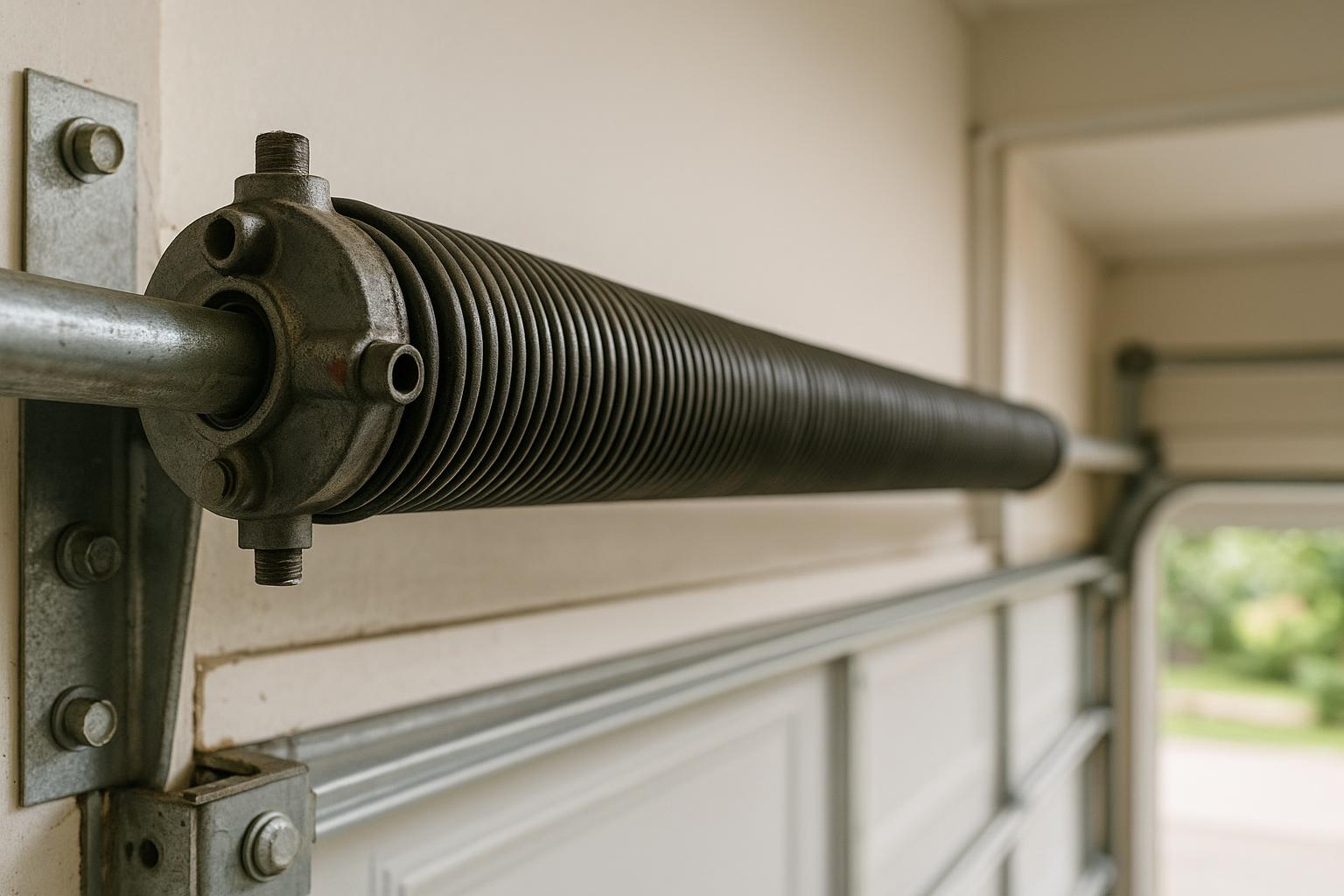
Before we get into the warning signs, it helps to understand what your springs actually do. Garage door springs carry the vast majority of your door's weight. When you press the button on your opener, the motor isn't doing the heavy lifting — the springs are. They store mechanical energy when the door is closed and release it to help lift the door when it opens.
There are two main types of springs used in residential garage doors:
- Torsion springs — mounted on a metal shaft above the door opening. These are the most common type in modern installations.
- Extension springs — mounted along the horizontal tracks on either side of the door. These are more common in older homes.
Both types are under extreme tension, which is why spring replacement is one of the most dangerous garage door repairs and should always be handled by a professional.
Warning Sign #1: The Door Feels Heavier Than Usual
One of the earliest signs of spring wear is a door that feels noticeably heavier when you try to lift it manually. If you disconnect the opener and try to raise the door by hand, it should move smoothly and stay open about three or four feet off the ground. If it's difficult to lift or slams back down, your springs are losing their tension.
This is a sign many Buffalo homeowners miss because they rarely operate the door manually. But testing it once or twice a year can give you an early heads-up that something is off.
Warning Sign #2: The Door Opens Unevenly or Crooked
If your garage door tilts to one side as it opens or closes, one of your springs may be weaker than the other. This is especially common with extension spring systems, where each side has its own spring. When one starts to fail before the other, the door pulls unevenly, putting stress on the tracks, cables, and opener.
A crooked door isn't just an annoyance — it can cause additional damage to other components if left unaddressed.
Warning Sign #3: You Hear Squeaking or Popping Sounds
Some noise is normal when a garage door operates, but new or unusual sounds are worth paying attention to. Squeaking, grinding, or popping noises coming from the area above the door can indicate that a torsion spring is starting to deform or that the coils are rubbing against each other unevenly. These sounds often get worse over time and typically mean the spring is approaching failure.
Warning Sign #4: Visible Gaps in the Spring Coils
This one requires a visual inspection. Take a look at your torsion spring — the tightly wound coil mounted on the shaft above the door. When the spring is in good condition, the coils are pressed tightly together. As the spring weakens and nears the end of its cycle life, you may notice visible gaps between the coils, almost like the spring is starting to stretch out.
If you see a clear separation between coils, it's time to call a professional. That spring could break at any time.
Warning Sign #5: The Opener Is Struggling
Your garage door opener is designed to work with the springs, not to replace them. If the springs are weak, the opener has to work much harder to move the door. You might notice the motor straining, the door moving more slowly than usual, or the opener stopping partway through the cycle.
Continuing to run the opener with failing springs can burn out the motor, leaving you with two repairs instead of one. If your opener seems to be working harder than it used to, weak springs are one of the most likely culprits.
Warning Sign #6: The Door Won't Stay Open
A properly balanced garage door should stay in place when you open it manually and let go about halfway up. If the door slowly creeps down or drops quickly, the springs no longer have enough force to counterbalance the door's weight. This is a safety concern, especially if children or pets are nearby.
How Long Do Garage Door Springs Last?
Most standard garage door springs are rated for approximately 10,000 cycles — one cycle being a single open-and-close operation. For the average household that opens and closes the garage door four times a day, that works out to roughly seven years of use.
However, Buffalo's climate can shorten that lifespan. Metal contracts in cold temperatures, and the repeated expansion and contraction through our long winters adds extra stress to the springs. Homes in areas like Cheektowaga, West Seneca, and Orchard Park that see heavy daily garage use may find their springs wearing out even sooner.
High-cycle springs rated for 25,000 or even 50,000 cycles are available and worth considering if you want to avoid frequent replacements.
Why You Should Never Replace Springs Yourself
We understand the DIY instinct — plenty of homeowners in the Buffalo area are handy and capable. But garage door spring replacement is genuinely dangerous. Torsion springs are under enormous tension, and an improper removal or installation can cause serious injury. Every year, emergency rooms across the country treat people who attempted this repair on their own.
A trained technician has the tools, experience, and safety knowledge to replace springs quickly and correctly. It's one of those jobs where calling a professional isn't just recommended — it's essential.
What to Do If You Spot These Warning Signs
If any of the signs above sound familiar, here's what we recommend:
- Stop using the door if it's visibly damaged or making alarming noises. Continuing to operate it can cause further damage or create a safety hazard.
- Don't attempt to adjust or replace the springs yourself. The tension involved makes this a job for professionals only.
- Schedule an inspection. A qualified technician can assess the condition of your springs and other hardware and let you know exactly what needs attention.
At Buffalo Garage Door Service, we handle spring replacements throughout Buffalo, Lackawanna, Hamburg, and the surrounding communities every week. We've seen every type of spring setup and every stage of wear, and we can get your door back in safe working order — usually the same day you call.
Don't Wait for the Snap
A broken garage door spring is one of the most common service calls we receive, and in almost every case, the homeowner tells us they noticed something was off weeks or even months before the spring finally gave out. By paying attention to the warning signs and acting early, you can avoid the inconvenience of a door that won't open, protect your opener from unnecessary strain, and keep your family safe.
If your garage door isn't acting right, give us a call. We'll take a look, give you an honest assessment, and make sure everything is working the way it should.