
The One Test Everyone Runs, and Why It Isn't Enough
Almost every buyer walking through a home does the same thing in the garage: hit the opener button and watch the door glide up and down. It looks smooth, it looks quiet, so it gets a mental checkmark and everyone moves on to the kitchen. It's tempting because it's fast, free, and feels thorough — the door moved, so it works, right?
The problem is that a door can look perfectly fine on a single cycle and still be one cold snap away from a snapped cable or a spring that lets go while someone's standing under it. General home inspectors usually give the garage door the same quick glance, because it's one line item among dozens on their list and they're not required to load-test springs or trip the safety sensors. That leaves real mechanical problems for the new owner to discover the hard way, usually in January.
A Walk-Through Checklist for Your Own Garage
1. The balance test
Pull the manual release cord so the opener disconnects, then lift the door by hand to about waist height and let go. A properly balanced door stays put. If it drops, slams down, or shoots upward, the springs are compensating incorrectly for the door's weight. That means the opener has been doing extra work it wasn't built for, which shortens its life and increases the chance of a sudden spring failure.
2. The auto-reverse safety test
Close the door and wave your hand (or a block of wood) through the photo-eye sensors near the bottom of the track. The door should stop or reverse immediately. If it doesn't, the sensors are misaligned, dirty, or disconnected — a real safety issue, especially with kids or pets in the house, and a quick fix most sellers never bother with.
3. Spring condition and type
Look up at the springs above the door. Torsion springs (the coiled kind on a bar) should have even, tight coils with no visible gaps or rust pitting. Stretched extension springs on either side of the track should have safety cables running through them. Rust, gaps between coils, or a missing safety cable all point to springs near the end of their service life, which is one of the most common surprise repairs for new homeowners.
4. Bottom panel and weatherstripping
Check the bottom few inches of the door and the rubber seal along the floor. Flaking paint, soft spots, or rust bubbles usually mean moisture has been sitting there through repeated freeze-thaw cycles. A cracked or torn bottom seal lets in drafts, meltwater, and road salt residue, which accelerates that same rust problem.
5. Track and roller alignment
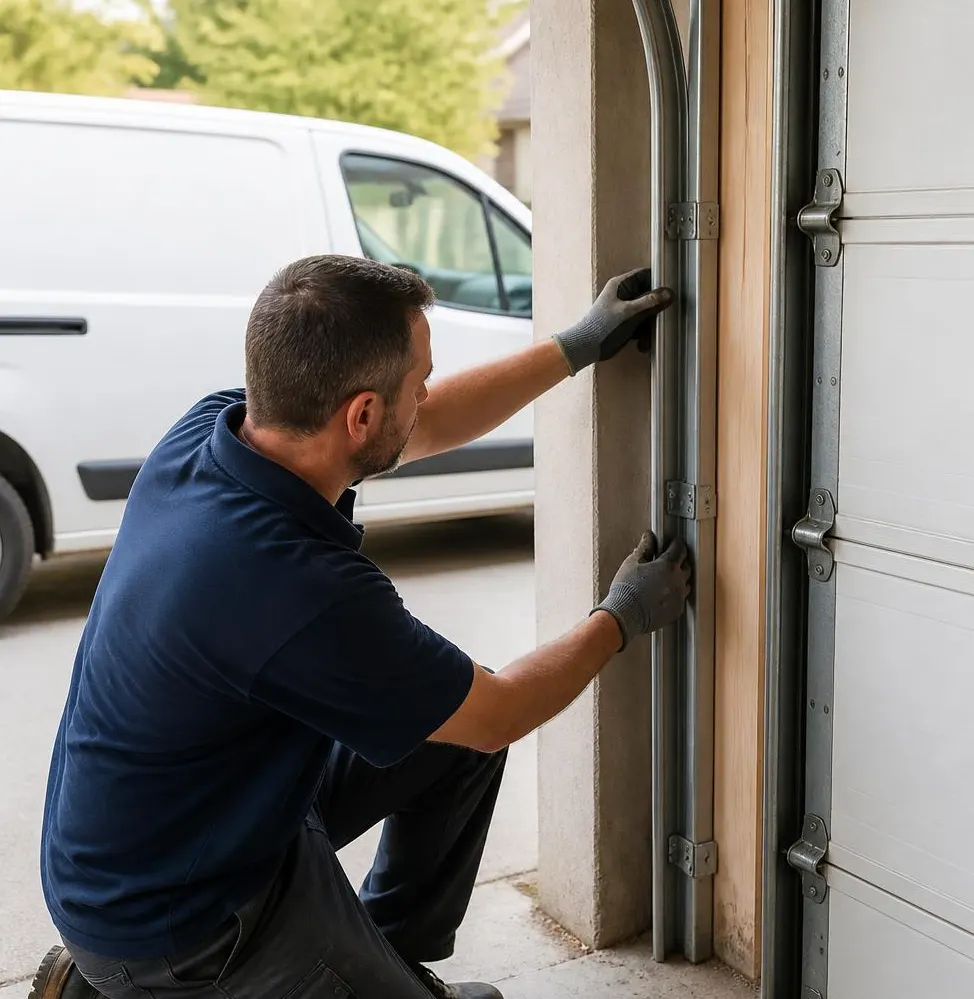
Stand back and sight down each track. It should run straight and parallel to the door, without visible kinks or gaps where it's bolted to the frame. Rollers should spin freely without grinding or sticking. Bent track is often a sign of a past impact or years of a door fighting bad springs, and it tends to get worse, not better, on its own.
6. Cable condition
Look at the lift cables running down to the bottom brackets on either side of the door. Any fraying, kinking, or visible rust means the cable could fail under tension, which usually causes the door to drop unevenly on one side.
7. Opener age and manual release
Check the opener's manufacture date on its label if you can find it, and confirm the manual release handle actually works and isn't painted over or seized. Older openers often lack modern rolling-code security and auto-reverse force limits, which matters more once the door is in daily use.
Why This Matters More in Older Housing Stock
Much of the housing in this area comes with original garage doors and hardware that have been through decades of humid summers, nor'easters, and winters full of salt and freeze-thaw cycles. That combination is tough on springs, tracks, and bottom seals in particular, so a door that looks fine in October can show its age fast once the first real cold snap hits.
When to Call Buffalo Garage Door Service
If any of these checks turn up rust on the springs, a door that won't hold its balance, or tracks that don't line up, it's worth having it looked at before you're relying on it daily. Buffalo Garage Door Service handles Spring Replacement and full Garage Door Maintenance visits, including balance adjustments, cable inspection, and safety sensor alignment, so you know exactly what you're working with before winter sets in.
If you're buying, selling, or just moved into a home in Buffalo, NY and want a second opinion on the garage door, give Buffalo Garage Door Service a call — we'll walk the garage with you and tell you exactly what needs attention.